
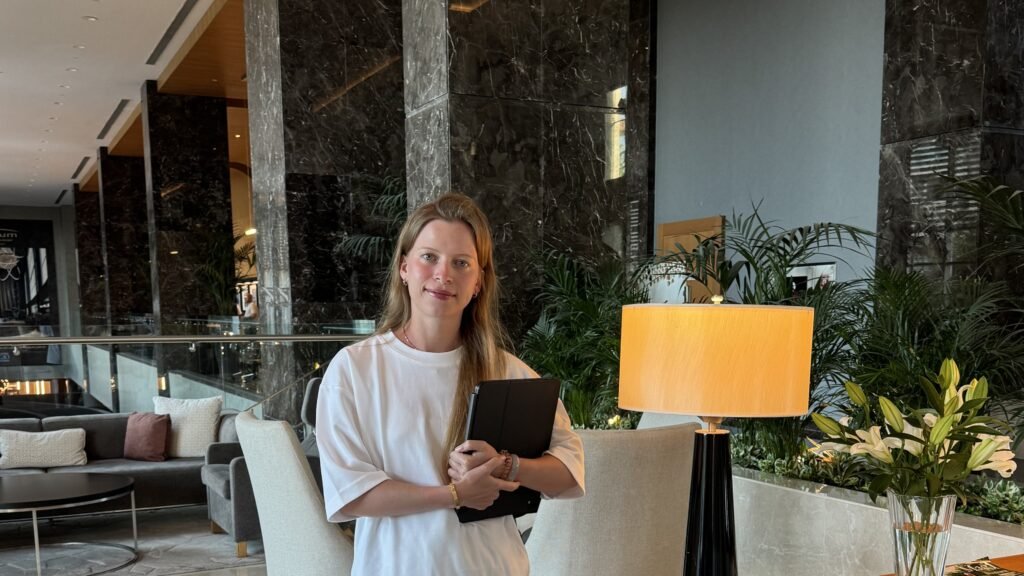
The faces that filled Regnum Carya’s lobby last night were young enough to have grown up with beauty filters as default reality. Perfect audience for dismantling our algorithmic beauty future.
The conversation started predictably with questions about character development, research process, typical book discussion territory. Then someone asked if I thought beauty subscriptions would actually happen.
‘They already exist,’ I said. ‘You pay monthly for premium filters. You upgrade your photo editing apps. The only difference between now and my fictional world is the surgery.’
That shifted everything. The room got quieter, more focused.
A young influencer with that particular glow of professional prettiness asked about my protagonist’s ethics. ‘Does she ever refuse to fix someone?’
The question hit exactly what makes this book unsettling. ‘She thinks she’s helping. When someone’s smile freezes mid-laugh during a conference call, fixing that glitch feels like basic human kindness. She hasn’t realised yet that debugging humanity means controlling it.’
Someone else asked about the timeline. How did I go from that July conversation with my ‘influencer hands’ client to 25,000 words by August?
‘The research became addictive,’ I admitted. ‘Every beauty app update, every new filter, every client apologising for their “genetic” features. It all feeds the story. Reality keeps making my dystopia look conservative.’
The most memorable moment came when a marketing executive asked about Aesthetic Dynamics Corp, my fictional beauty-tech company. I explained their business model: leasing beauty instead of selling it, making your reflection into subscription content.
‘That’s terrifying,’ she said.
‘What’s terrifying,’ I replied, ‘is how reasonable their mission statement sounds. They want to eliminate ugliness, insecurity, the random cruelty of genetics. Who argues against that?’
The conversation ran past 9 PM. People stayed to argue about where enhancement ends and replacement begins. About whether standardising beauty means standardising thought. About the difference between choosing your appearance and having it chosen for you.
One woman mentioned she’d stopped using beauty filters after reading my blog posts. ‘I forgot what my actual face looked like,’ she admitted.
That’s the response that matters. Seven weeks from concept to serious discussion about the future we’re building. Project Mirror isn’t about some distant dystopia. It’s about recognising what’s happening right now, one algorithm at a time.
Posted from Antalya, where conversations about beauty feel more honest under Turkish stars.
— Writer Julia Zolotova
