
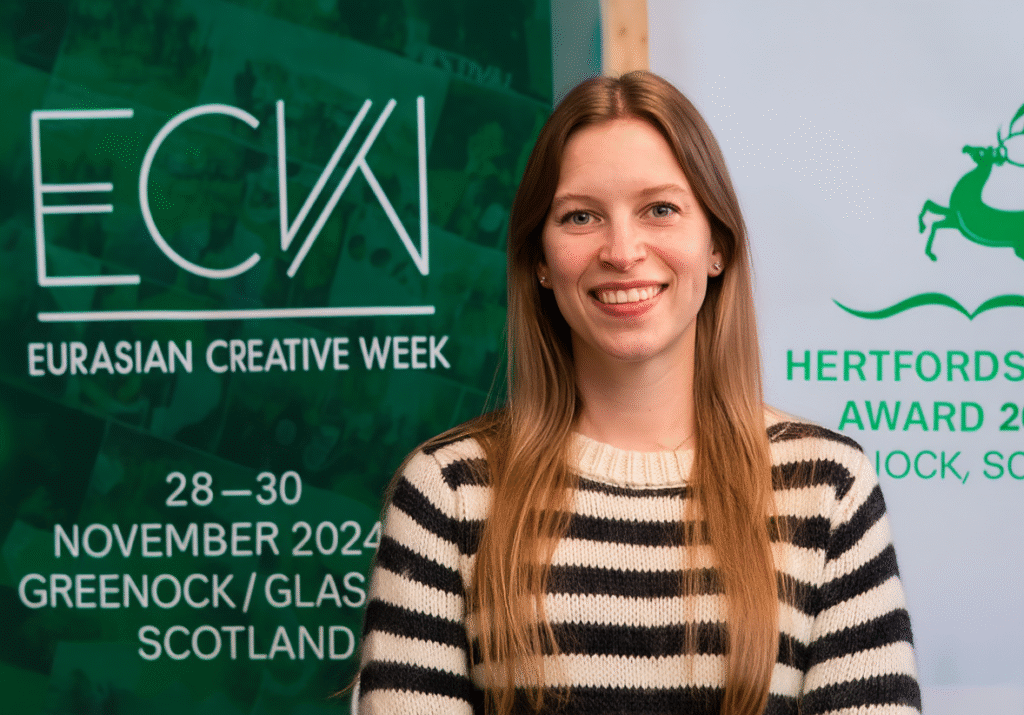
I spent last weekend in Greenock facilitating book presentations for Eurasian Creative Week. Not speaking. Facilitating. Different skill entirely.
ECG organized the event across two venues: Beacon Arts Centre for public programming, OYO Gin House Hotel for workshops. Three days, multiple language streams, writers from across Europe and Central Asia presenting work.
Marta Brassart asked me to bridge English and Russian-speaking participants during book presentations. Not translate. Bridge. Ensure conversation flows between language groups without losing literary focus.
Harder than it sounds. You’re managing two parallel discussions that need to merge into one coherent exchange. Someone makes point in Russian, generates response in English, which needs accessible Russian summary without derailing momentum.
My job: keep conversation focused on text, make sure quieter voices participate, prevent any single language from dominating.
The work required constant attention. Who’s been silent too long? Which comment needs translation for other half of room? When to let discussion flow in single language versus when to actively bridge?
One session examined contemporary poetry across borders. Russian poet presented work exploring Soviet memory. English responses focused on form. Russian responses engaged historical context. Both valid, both necessary. My role: ensure each side heard what the other was actually saying.
Another session discussed experimental prose structure. Writer from Kazakhstan presented fragmented narrative using multiple timelines. English speakers wanted craft discussion. Russian speakers wanted thematic analysis. Again: both useful, both needed synthesis.
What struck me: how often people talk past each other not from disagreement but from untranslated assumptions. English literary discussion emphasizes individual voice and innovation. Russian literary tradition emphasizes collective memory and continuity. Same text, different interpretive frameworks.
Facilitation means making those frameworks visible so people can actually engage rather than just waiting for their turn to speak.
By Sunday evening I was exhausted. Not from translating words but from managing parallel conversations that needed to become single dialogue.
Marta said afterward this is precisely why ECG wants me involved in their programmes. Not just as writer, but as someone who can help bilingual literary events actually function bilingually rather than just alternating monolingual presentations.
I hadn’t thought of facilitation as skill distinct from writing or speaking. But it is. And apparently I’m decent at it.
Greenock itself: Scottish port town, industrial history visible in architecture, rain. The Beacon Arts Centre felt appropriate venue for cross-cultural work. Built as space for community gathering, not just performance.
ECG plans more events like this. They want me involved in future facilitation work. I said yes. This matters as much as writing does.
Posted from London, where literary infrastructure requires facilitation as much as creation.
— Writer Julia Zolotova
