
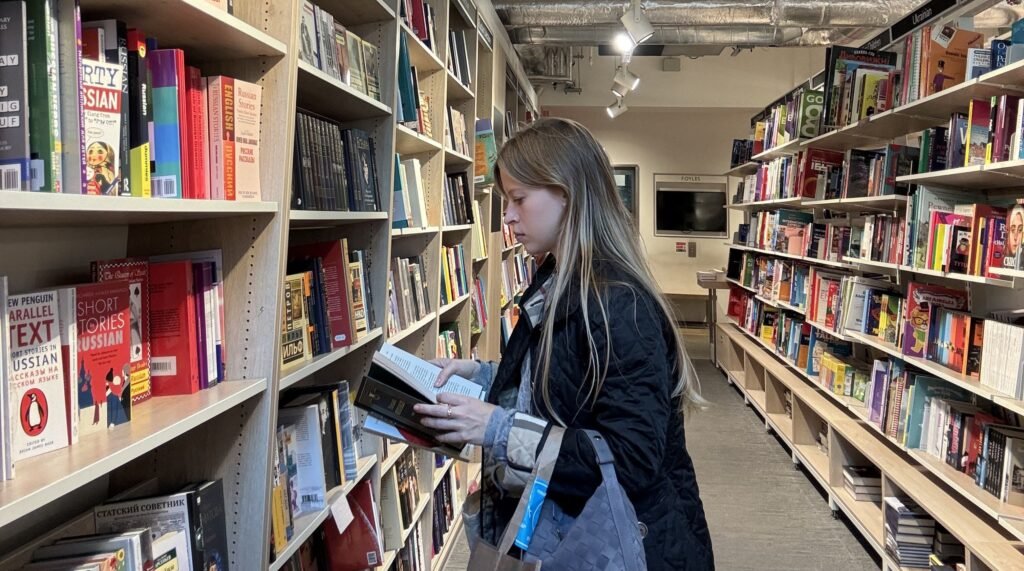
Yesterday I spent three hours wandering the six floors of Foyles on Charing Cross Road, and came away with exactly the kind of intellectual stimulation I didn’t know I needed.
There’s something about being surrounded by 200,000 books that makes your own writing feel simultaneously insignificant and urgent. Standing in that spacious atrium with natural light streaming down from the upper floors, I felt that familiar writer’s hunger: the need to read everything, absorb every technique, understand every voice that’s ever put words to page.
I picked up The Courage to Be Disliked by Ichiro Kishimi and Fumitake Koga in the psychology section. The premise intrigued me: a dialogue between a philosopher and a young man over five nights, exploring Alfred Adler’s theories about happiness and change. Adler believed people can transform their lives regardless of past trauma, that everyone can be happy if they have the courage to be disliked by others. Reading the first chapter, I recognised something familiar about the courage it takes to write authentically, knowing not everyone will appreciate what you create.
In the writing craft section, I discovered How Not to Write a Novel by Sandra Newman and Howard Mittelmark. Instead of typical advice, they present 200 common mistakes through hilariously bad examples. Their ‘mis-examples‘ made me cringe and laugh simultaneously. I recognised my own early attempts at dialogue, character development, plot construction. Sometimes learning what not to do teaches more than conventional guidance.
The classics section pulled me in completely. Floor-to-ceiling shelves of everything from Austen to Woolf, each spine representing years of someone’s creative life. I found myself thinking about literary dialogue techniques, how the great conversations on these pages could inform my own work.
The Russian books section felt like discovering a hidden corner of my heritage. Seeing Tolstoy and Dostoevsky in their original language reminded me how translation shapes narrative voice, something I consider daily when writing characters who think across languages.
By the time I reached the café on the top floor, my head was spinning with new ideas. Project Mirror suddenly felt less isolated, more connected to this vast conversation between writers across centuries.
Posted from London, where the weight of literary history makes your own words feel both daunting and essential.
— Writer Julia Zolotova
