
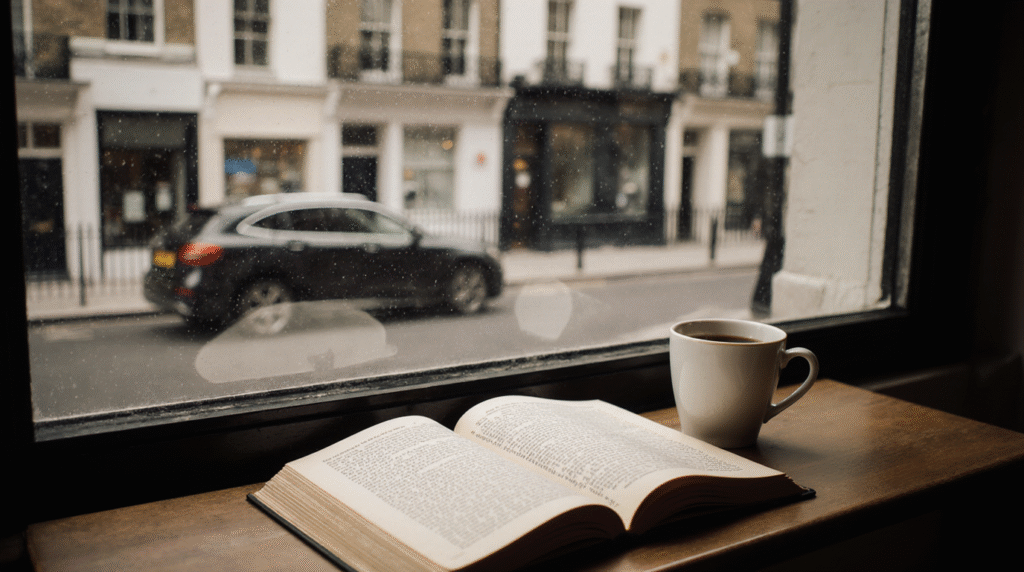
Coffee with Lydia yesterday turned into three-hour discussion about narrative architecture. She’s reading Luxury Labyrinth manuscript and asking questions that make me reconsider character motivations I thought were settled.
Her BBC documentary experience gives her unique perspective on structure. She sees stories visually and temporally in ways I hadn’t considered. Not just what happens but how information reveals itself to audience. Documentary editing logic applied to fiction.
She challenged my pacing in the third act. Too much exposition, not enough visual anchoring. In film you can’t explain everything through internal monologue. You have to show psychological states through physical detail, through environment, through behaviour. Fiction allows lazier approaches.
We talked about cultural translation. How to write characters navigating multiple contexts without anthropologising them for Western readers. She deals with similar issues in documentary work. Whose perspective dominates the frame? What gets explained versus what remains opaque?
Lydia proposed regular mentorship meetings. Strange to find someone who understands both the technical craft and the emotional weight of writing between cultures. Most feedback I get is either too gentle or misses the cultural specificity entirely.
She doesn’t praise indiscriminately. Points out exactly where prose turns vague, where motivation feels thin, where I’m avoiding difficult questions. This matters more than encouragement.
Already rethinking several scenes in Luxury Labyrinth based on her notes. The novel needs stronger visual grounding. Less telling, more showing through detail.
Posted from London, grateful for difficult questions.
— Writer Julia Zolotova
